

More oil and fewer washes aren't automatically kinder to your hair. A routine that keeps loose curls soft can coat beads, soften the grip around attachments or leave residue beneath a weft. For extension wearers, natural hair maintenance means caring for your own hair, your scalp and the attachment system together.
On the Gold Coast, that also means planning for sweaty workouts, ocean swims and humid evenings. The best routine isn't the richest treatment or the longest possible wash gap. It's one you can repeat without leaving your scalp uncomfortable, your roots damp or your natural hair under unnecessary tension.
Table of Contents
- A Maintenance Schedule for Your Hair Situation
- Wash, Detangle and Product Placement
- Traction Checks Before the Next Refit
- Sun, Humidity and the Beach Between Refits
- Book a Refit or Crown Wash in Ashmore
A Maintenance Schedule for Your Hair Situation
Natural hair maintenance rhythm by situation
| Situation | Wash rhythm | Detangle rule | Attachment note | Professional check |
|---|---|---|---|---|
| Fine or delicate hair | Every 3–4 days as a starting plan, sooner if oily or sweaty | Wide-tooth comb from the ends, low tension | Nano or micro beads; no conditioner on beads | Tension check about every 6–8 weeks |
| Medium hair with wefts | Every 2–3 days | Detangle before washing and support the weft | Invisible or butterfly wefts; cleanse along the track, don't scrub stitches | Refit about every 6–8 weeks |
| Curly or textured hair | Every 3–4 days, or when the scalp feels oily | Section detangle with slip; don't rip through knots | Leave-in on lengths only, not on bonds or beads | Refit before matting develops; movement may warrant an earlier check, often within 6–8 weeks |
| Swimming, gym or heavy sweat | Rinse the same day; shampoo every 1–3 days | Detangle first, then cleanse | Any method; dry roots and attachments fully | Sooner if odour, slippage or itching |
| Colour-treated hair | Every 2–4 days with lukewarm water | Minimal brushing; heat protectant before tools | Human hair; keep heavy oils off bonds and wefts | Colour of natural hair reviewed at refit |
Change rows when your activity, scalp oiliness or hair condition changes, rather than treating the starting gap as a rule you must endure.
These are starting schedules for an individual aftercare plan, not permission to ignore discomfort until the next appointment. Fine hair doesn't automatically need less cleansing, and curly hair doesn't automatically need more oil. Your scalp may need washing before the lengths need conditioning.
Match the routine to what's attached
Invisible and butterfly wefts need access along the track so you can clean the scalp without rubbing the stitching. Micro and nano beads need careful separation and product placement. Keratin bonds need a routine that avoids coating the attachment with rich treatments.
A V Part topper introduces another distinction: the removable piece and the hair beneath it don't necessarily share a wash schedule. Follow the attachment instructions, remove it when appropriate for cleansing, and check the covered scalp rather than judging cleanliness from the visible hair alone.
For curls, organise the job before wetting everything. Separate manageable sections, work through knots with conditioning slip on the lengths, and support the attachment while detangling. A fast brush-through that pulls at the roots isn't a useful shortcut.
Put scalp comfort beside appearance
In a nationally representative May 2024 survey of 2,009 Australian adults aged 18 and over, hair loss or thinning was the most frequently reported concern at 43%, followed by dandruff at 34%, according to Kérastase's Australian hair-care survey. That's a useful reminder to assess density and scalp condition, not just shine.
Before starting this week's routine, note where your scalp feels comfortable, where your hair tangles and whether you can reach between the rows. That gives you something concrete to discuss at maintenance.
Practical rule: A wash gap is useful only while the scalp stays comfortable. Soreness isn't a reason to keep stretching it.
Wash, Detangle and Product Placement
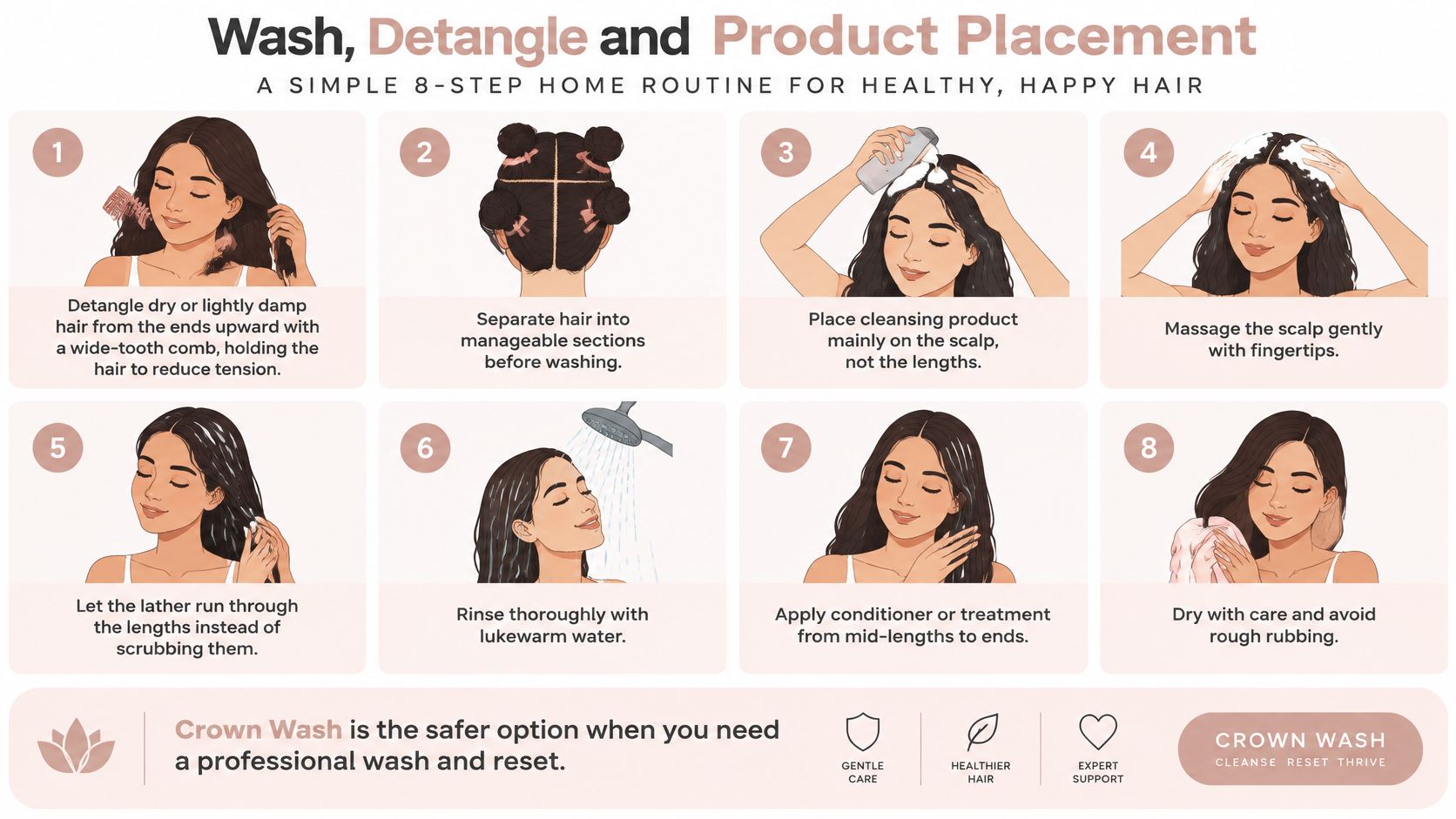
- Detangle before washing. Work through dry or lightly damp hair with a wide-tooth comb, starting at the ends and moving upwards. Hold the hair close to the weft, bead or bond so the pull doesn't transfer to your roots. Separate manageable sections rather than dragging a comb through the whole head.
- Wet the hair with lukewarm water, directing the flow downwards. Avoid a hot stream concentrated on the scalp, and don't pile the lengths on top of your head. Keeping them hanging naturally makes attachment rows easier to reach.
- Apply gentle shampoo to the scalp. Use your fingertips between the attachment rows, not your nails. Clean along a weft track without scrubbing stitches, and work around beads and keratin bonds rather than rubbing them together. Let the lather move through the lengths.
- Rinse carefully, lifting sections enough to let water reach underneath. Continue until the shampoo has cleared, especially beneath wefts and behind the ears. Foam disappearing from the visible lengths doesn't mean the scalp is fully rinsed.
- Condition from mid-lengths to ends. Keep conditioner, masks and rich leave-ins away from beads, bonds and weft tracks. The lengths need slip for detangling; the attachment area needs to stay accessible and free of heavy coating.
- Rinse the conditioner thoroughly. Run your fingers gently through the sections to check for pockets of product, without tugging on the installation. Don't leave a thick treatment behind because the hair still feels dry.
- Blot with a towel rather than rubbing. Press water out of the lengths and handle the hair gently. Don't twist everything into a tight towel knot or tie wet hair up, because the roots and covered attachment zones can stay damp.
- Dry the roots and attachment area completely before bed. Separate strands gently as you work so beads, bonds and stitching aren't dragged. Use low heat and controlled airflow, then finish the lengths without pulling hard through a brush.
Product placement by hair zone
| Zone | Use | Keep off |
|---|---|---|
| Scalp and roots | Gentle shampoo applied with fingertips | Nails and scrubbing on stitches, bonds or beads |
| Lengths and ends | Conditioner, plus a light leave-in if hair is curly or dry | Bonds and bead line |
| Weft tracks and bonds | Rinse residue away with clean water | Conditioner, masks and heavy oils |
| Ends only | Oils or butters if the hair needs them | Roots and attachment rows |
| Heat tools | Low heat with a protectant | Direct contact with attachments |
Clean the scalp without punishing the lengths
The Australasian College of Dermatologists' hair-care guidance recommends shampooing every 1–3 days, adjusted for scalp oiliness and exercise, alongside lukewarm water, gentle handling and low heat. For extensions, the practical adaptation is where you put your fingers and products, not abandoning scalp cleansing to protect the added hair.
Say your roots feel oily after training but your ends feel rough. Shampoo the scalp properly, then condition the lengths separately. Spreading a heavier mask over the roots treats the wrong zone and makes the next wash harder.
Sulphate-free isn't a substitute for effective cleansing. A suitable formula may work well for colour and comfort, but the label alone doesn't tell you whether you've removed sweat, styling residue or accumulated oil. If the scalp remains coated after washing, review the product and your rinsing technique.
Clarifying shampoo has a place when there's obvious buildup and the formula is compatible with the attachment method. It shouldn't become the automatic response to every gym session. Repeated strong cleansing can leave both your natural lengths and human hair extensions feeling dry.
Use less product before adding another treatment
For frizzy ends, start with a small amount of lightweight leave-in below the attachment zone. Assess the result after drying before adding oil or butter. Layering several products onto damp hair makes it difficult to tell which one is helping and which is leaving residue.
Heat protectant belongs in the styling routine, but it doesn't make unlimited heat harmless. Keep tools away from attachments and avoid repeatedly passing over the same section. Healthdirect's guidance on hair problems identifies excessive heat, chemical processing, bleaching and over-brushing as contributors to hair damage.
Our guide to washing hair with extensions provides a written reference for wash day. Keep the instructions for your particular method beside your products so you're not guessing halfway through.
Choose a Crown Wash when you can't see or reach your rows, can't clear residue comfortably, or aren't sure how much pressure is safe. A professional wash and reset is more useful than repeatedly scrubbing an inaccessible patch. Use the appointment to learn exactly where your cleansing and conditioning products should go.
Traction Checks Before the Next Refit
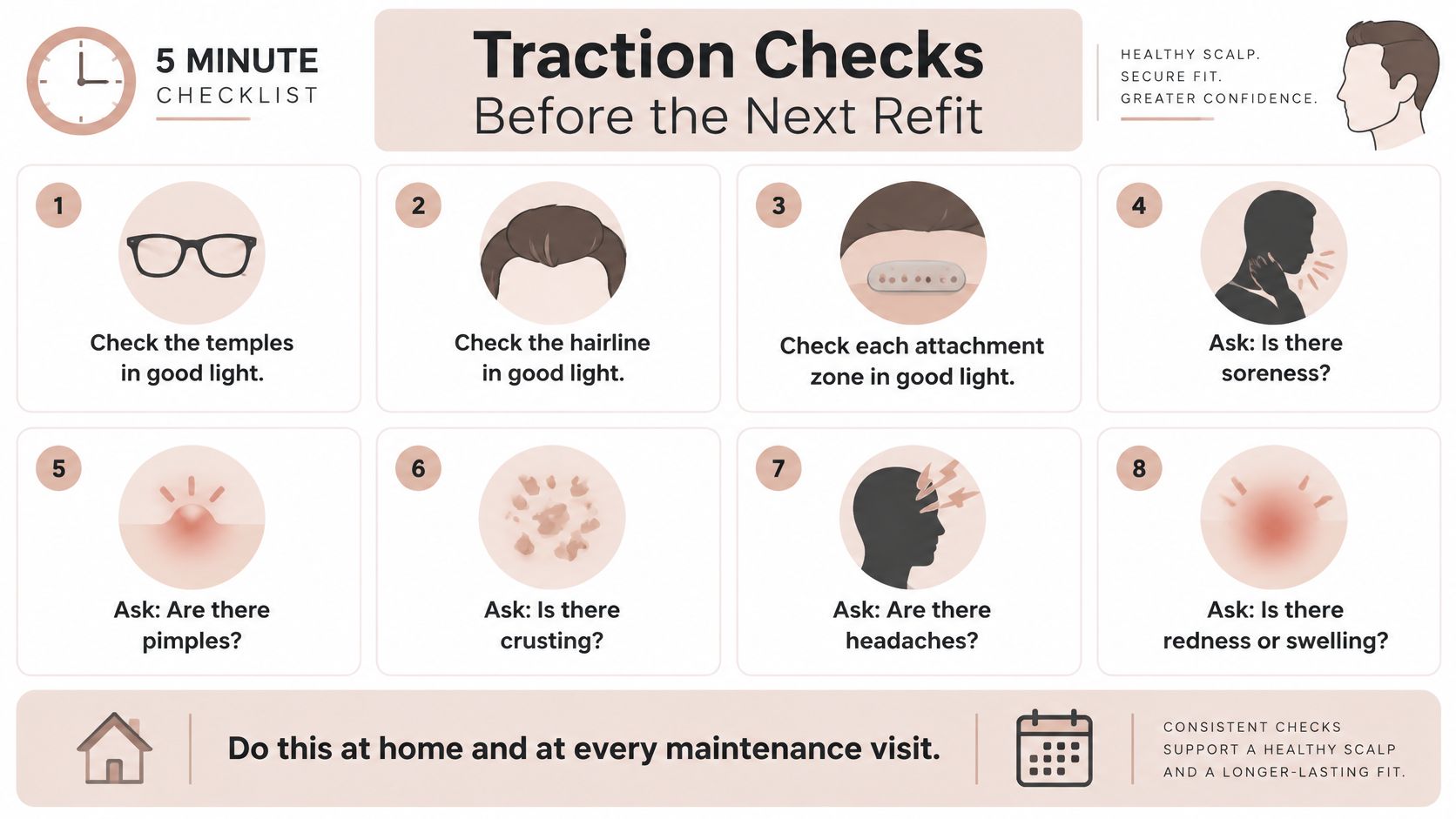
Set aside a five-minute home check in good light. Part the hair gently and inspect your temples, hairline and each attachment zone, using a second mirror where needed. Ask yourself whether there's soreness, pimples, crusting, headaches, redness, swelling or more shedding than usual.
Check after taking down a ponytail as well as when your hair is loose. A style can look tidy while pulling at the same small area all day. Pain isn't a running-in period, and the same inspection belongs at every maintenance visit.
Scalp symptoms and what to do next
| What you notice | Likely meaning | Next action |
|---|---|---|
| Soreness at temples, hairline or beads | Tension on the natural hair | Take down tight styling and arrange professional loosening or removal before another install |
| Pimples, crusting or itch along the rows | Possible irritation, buildup or another scalp condition | Use a method-safe wash, stop heavy oils there, and seek assessment if inflamed or persistent |
| Headache after a ponytail or upstyle | Sustained pulling may be contributing | Take the style down the same day; seek medical advice if the headache persists |
| Shedding in clumps or a fast-widening part | Possible traction alopecia or another cause of hair loss | Stop the aggravating style and seek medical assessment |
| Mild early thinning that settles after rest | Early traction-related loss may recover when pulling stops | Don't reinstall over the affected area until it has been assessed and is comfortable |
These signs aren't a diagnosis. Itch can have several causes, and visible shedding shouldn't automatically be blamed on extensions without assessment.
Act on pulling before the calendar says to
The Australasian College of Dermatologists' traction alopecia guidance identifies continuous pulling from weaves, braids, tight ponytails and hair extensions as a cause of hair loss. Early loss may be reversible, but continued traction can lead to permanent loss. That makes duration and location of pulling more important than whether the installation still photographs well.
If a ponytail is the problem, take it down. If an attachment continues to pull with the hair loose, arrange prompt professional adjustment or removal rather than trying to loosen a bead or dissolve a bond yourself. Clumps of loss, rapid changes in density or shedding that continues after tension is removed need medical assessment.
If you notice the hair all evening, the maintenance has already failed.
That's a comfort test, not a diagnosis. It means persistent awareness of pulling deserves action, even if there's no obvious bald patch.
A refit is a reassessment, not an automatic reinstall
Putting heavy wefts on a fragile perimeter, sleeping in a high ponytail and reinstalling over tender skin all miss the same point: the natural hair must tolerate the load. Adding more hair because the previous set still looks full isn't a sound maintenance decision.
A planned refit allows attachment position, weft comfort, natural hair condition and blending to be reviewed. Our guidance on hair extensions without damage explains why method suitability and ongoing care belong together. If tenderness keeps returning, reconsider the method or weight rather than accepting discomfort as the cost of longer hair.
Sun, Humidity and the Beach Between Refits
Check the UV forecast before a beach day, boat trip or long outdoor walk, including in winter. ARPANSA recommends sun protection when the UV Index reaches 3 or above, using protective clothing, a broad-brimmed or legionnaire-style hat, shade and sunglasses; it also advises broad-spectrum, water-resistant SPF50+, applied 20 minutes before going outdoors and reapplied every two hours.
A hat helps cover a visible part and exposed scalp around an installation. Choose one that sits comfortably rather than compressing a bulky upstyle or catching on attachments. Shade is useful for both your skin and reducing prolonged exposure of unprotected hair.

Protect your skin without coating the installation
Don't skip sunscreen to protect extensions. Apply it carefully to exposed skin, keeping thick residue off bonds, beads and weft tracks where possible. A hat is particularly helpful when the part or hairline is difficult to protect neatly.
After swimming, deal with salt, chlorine and sweat the same day. Use the wash routine appropriate to your method rather than adding an aggressive clarifying wash after every dip. Outdoor plans may change when you wash, but they don't justify rougher handling.
For bead wearers, our micro bead extension care guide gives method-specific guidance to use alongside your individual aftercare plan.
Allow more drying time in humid weather
The Australian Bureau of Statistics' overview of Australia's climate describes northern Australia's highest humidity during the summer wet season, December to February. That's broad northern Australian context, not a Gold Coast-specific humidity measurement. For Queensland clients, the practical point is to check how dry the covered roots are rather than assuming they've dried because the ends feel ready.
- After an evening swim: Leave enough time for the full wash-and-dry routine before bed. Don't replace drying with a tight wet bun.
- When frizz appears: Use an extension-appropriate brush while supporting the attachment, and address the lengths rather than adding heavy oil to the scalp.
- Before sleep: Keep dry hair loosely braided or secured low with a soft silk scrunchie, without pulling the hairline.
- After repeated ocean swims: Arrange professional wash support if you can't get the tracks clean or dry comfortably.
Beach-day judgement: A smooth finish isn't proof of a clean, dry attachment area. Check underneath the hair.
Say you swim after work and normally go straight to dinner. Plan the drying time before committing to the swim, or adjust the evening. Humidity changes the effort required between refits, not the need to protect both your own hair and its attachments.
Book a Refit or Crown Wash in Ashmore
Book a professional visit when your scheduled maintenance is due, beads have travelled, a weft no longer sits flat or home washing isn't clearing odour or itch around the rows. Book sooner if you notice ongoing tenderness, attachment-area breakage or shedding that worries you. Don't add more hair over an unresolved problem.
The useful question isn't whether you need a wash or a refit. It's whether the current installation is clean, comfortable and still appropriate for the natural hair supporting it. Persistent scalp symptoms may also need medical attention rather than another salon treatment.
Choose the appointment around the problem
- The roots won't feel clean: Describe where residue or odour remains and what you've been applying there. That helps distinguish a cleansing-access problem from something needing further assessment.
- The attachment position has changed: Explain whether you're noticing movement, catching or a track that won't sit as it did. Don't wait for tangles to become compacted.
- You want more length or volume: Discuss your current hair condition before deciding on added weight. The goal should include comfortable daily wear, not just the finished style.
- You're unsure what's wrong: Start with an assessment rather than booking the same installation by habit.
Hair Extensions Full Stop is based in Ashmore on the Gold Coast, with one-to-one consultations. We assess your natural hair, discuss your goals and recommend the most suitable extension option. Every installation is customised to your hair, lifestyle and desired result, with personalised colour matching, expert blending and honest advice.
Make maintenance part of the consultation
For fine or delicate hair, ask us to assess weight distribution and discuss whether a lightweight weft or nano bead approach suits your density. A discreet attachment is useful only if the surrounding hair can support it and you can manage the aftercare. Your swimming, training, styling and washing habits belong in that decision.
If you're comparing hair extensions on the Gold Coast, bring more than a reference photo. Tell us how often you wash, whether you wear your hair up for work and how much drying time you realistically have. Those details help us recommend a method rather than defaulting to one system.
Our free care guide covers washing extensions correctly, choosing suitable products, why heat protectant is essential, sleeping and swimming tips, and a recommended maintenance schedule. Ask for it so you have a clear written routine between appointments.
When enquiring about hair extension application on the Gold Coast, explain whether you're a first-time wearer, need maintenance on an existing installation or want help with crown coverage. We provide local, in-person services using human hair extensions, not an online shopping experience. The next step should solve the upkeep problem as well as deliver the appearance you want.
Hair Extensions Full Stop offers personalised human hair extension application, refits and Crown Wash support in Ashmore, with maintenance advice matched to your natural hair and attachment method. Visit Hair Extensions Full Stop to enquire about a consultation or arrange help keeping your extensions clean, comfortable and manageable between appointments.
Recent Articles


