

You've washed your hair, reached for the brush, and felt that familiar snag near the root. One keratin bond has started to move, the hair around it is beginning to tangle, and your next appointment is still weeks away. On the Gold Coast, that combination of heat, humidity, swimming, gym sessions and busy routines can turn a manageable maintenance issue into a full removal.
Keratin bond extensions maintenance isn't just about keeping the lengths shiny. It's a lifecycle that begins on installation day and continues through the first wash, daily brushing, scheduled check-ins, refits and eventual removal. The bonds need protection from moisture, oils, tension, product buildup and direct heat, while your natural hair needs the right amount of weight and movement.
The advice below is deliberately practical. It covers what to do at home, what needs professional attention, why fine hair needs a different plan and why “low maintenance” doesn't mean maintenance-free.
Table of Contents
- Why Keratin Bond Extensions Maintenance Is More Than a Quick Fix
- The First 48 Hours After Your Bond Installation
- Daily Habits That Keep Your Bonds Looking New
- Washing Day Without Damaging Your Keratin Bonds
- Heat Styling, Products and Tangles to Avoid
- Adjusting Your Routine for Fine or Delicate Hair
- Salon Refits, Removal and a Realistic Maintenance Calendar
Why Keratin Bond Extensions Maintenance Is More Than a Quick Fix
A Gold Coast client came into the salon with extensions that still looked presentable over her shoulders. At the scalp, the situation was different. She had stopped brushing properly because the roots felt tender, tied her hair back for work and slept with it loose. Shed hairs had wrapped around the bonds, creating tight mats close to the scalp.
Matting like this builds over weeks of missed brushing, friction and moisture around the attachment points. Once the natural hair becomes caught inside the tangle, separating it in place can cause unnecessary breakage and discomfort. Her extensions needed professional removal before a fresh application could even be considered.
The lifecycle starts before the first wash
Keratin bond extensions maintenance is a sequence of decisions rather than a single appointment:
- Installation day: Bonds need suitable section sizes, controlled tension and enough clearance for the natural hair to move. Poor placement can create pressure before the client has even washed the hair.
- The first fortnight: Follow the advised dry period, keep oils away from the attachments and monitor tenderness, lifting or excessive tightness. Early discomfort is a reason to contact the stylist, not something to work around.
- Daily home care: Brushing technique, product placement, thorough drying and sleep habits decide whether shed hairs remain controlled or collect around the bonds.
- Personalised adjustments: Fine, delicate, oily or highly active hair may need lighter distribution, more frequent checks or stricter product control than thick, dry hair.
- Salon maintenance: A check-up or refit addresses growth, movement, tangling and bond condition before the attachment points become difficult to manage.
- Removal: Keratin bonds require professional removal. Picking, pulling or cutting them out at home can take natural hair with them.
Australian salon guidance generally treats keratin bond maintenance as a scheduled process, not constant salon servicing. Refits may fall within a broad three-to-six-month wearing window, although the suitable timing depends on hair density, growth, bond condition and how well the set has been managed. Australian keratin bond maintenance guidance also notes that bonds may only be rebonded once, so removal can mean fitting a fresh set rather than reusing every attachment.
The trade-off glossy guides often skip
Keratin bonds are discreet and can provide natural movement, but they remain adhesive attachments positioned close to the scalp. Chlorine, salt water, oily products, rough brushing and direct heat can weaken the bond area or make it harder to control. The lengths may still appear smooth while the roots are becoming increasingly tangled.
A low-maintenance result still depends on consistent care. Skipping brushing may save a few minutes, but it can leave shed hairs trapped around the attachments. Avoiding a refit may postpone an appointment, yet extra growth increases movement and makes tangles harder to release safely.
The practical rule: Extensions are a service, not a product you install and forget. Aftercare forms part of the result.
A consultation should cover more than colour and length. Discuss natural density, scalp behaviour, work routine, swimming, preferred hairstyles and willingness to attend maintenance appointments. Keratin bonds may suit the hair, but a weft, micro bead or nano bead system may distribute weight more appropriately. The right method is the one that remains manageable through installation, home care, refits and removal.
The First 48 Hours After Your Bond Installation
The morning after installation is when many maintenance problems begin. A client wakes with fresh bonds, ties the hair into a tight ponytail, adds dry shampoo at the roots and heads into a hot shower. The attachments may look fine, but moisture, pressure and heat can make the first few days harder on the bond and the natural hair beneath it.
Keep the hair dry for 48 hours after installation. Great Lengths Australia's keratin bond care guide also recommends a check-up within two weeks and keeping heat tools away from the bond area. Treat this settling period as part of the installation, not as optional aftercare.
The first day
Leave the attachments alone as much as possible. Avoid clips, tight ties and pins, along with firm headbands that press directly on the bonds. If the hair needs separating, use clean fingers gently between the rows. Dragging a brush through fresh attachments can place unnecessary force on the bond before it has had time to settle.
Sleep with the hair controlled but loose. A relaxed braid above the nape can reduce twisting and friction if it does not pull at the roots. A smooth pillowcase may also reduce snagging during the first night, especially for clients who move frequently while sleeping.
Keep heat away from the attachment points. A blow-dryer, straightener or curler held over a new bond can soften the keratin and encourage movement. Sweat, steam and damp roots belong on the avoidance list during this initial window, so postpone intense exercise, saunas and steamy showers where possible.
The first wash
Once the advised dry period has passed, wash with your head upright. Let water run from the scalp towards the ends, then use sulphate-free shampoo with controlled downward movements. Clean the scalp thoroughly without aggressive circular scrubbing, which can catch around the attachments. Apply conditioner from the mid-lengths to the ends, keeping it below the bond area.
Take your time afterwards. Blot rather than rough-dry the hair, separate the rows gently and dry the bonds completely on a low setting before styling the lengths. Wet attachments move more easily, and damp hair can tangle around the bonds while products transfer onto the keratin.
The two-week check
A check-in can reveal problems before they become a removal issue. The stylist should assess early lift, tenderness, bonds sitting too close to the scalp and sections carrying more tension than intended. Australian salon maintenance guidance sets out a wash at two weeks and a check-in at two months. Some providers may extend the first adjustment to three months for clients with slower growth and stable bonds, but that decision belongs with the stylist after assessing the installation.
Leave-in conditioner near the roots, tight clips, rough towel-drying and excessive heat rarely cause instant failure. They do make the attachment area less forgiving, which is why the first 48 hours set the tone for the rest of the wear period.
Daily Habits That Keep Your Bonds Looking New
The most reliable routine is simple, but it has to be consistent. Natural hair sheds every day. With extensions in place, those shed hairs can remain trapped around a bond unless you separate and brush the area carefully.
Morning care
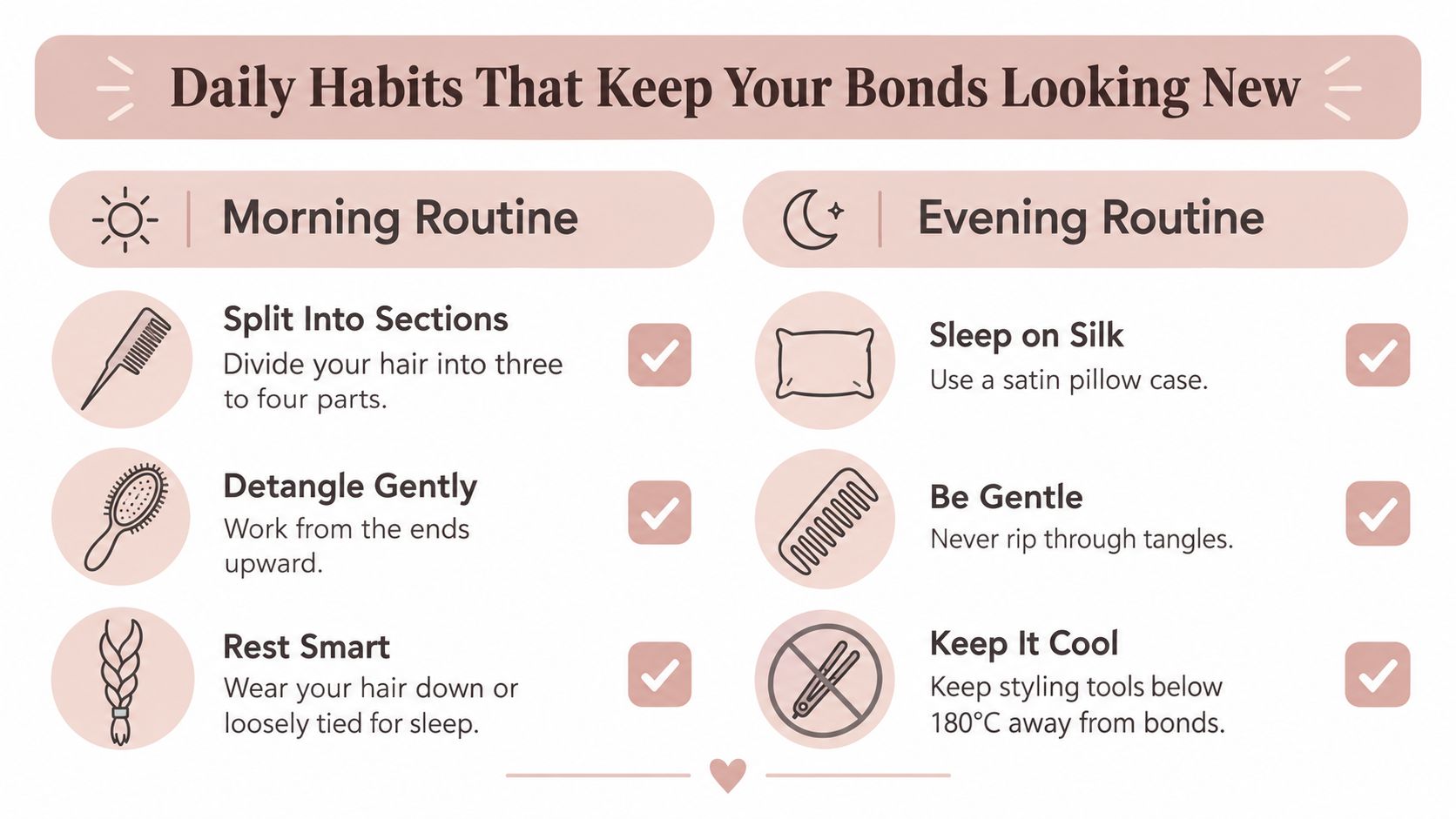
Start with dry hair. Divide it into three or four manageable sections so you're not trying to pull the whole head through one knot. Hold the hair above the area you're brushing, then work from the ends upwards with an extension-safe loop brush or paddle brush.
A snag isn't a test of strength. Stop, support the hair at the roots and loosen the tangle in small movements. Pulling from below the bond can transfer force directly to your natural hair.
Use leave-in conditioner, serum or a lightweight detangling product from the mid-lengths to the ends only. Oils and rich products around the attachment points can soften or contaminate the adhesive, so the root area should stay clean and relatively product-free.
During the day
A loose plait can keep the hair controlled at the gym, on a windy walk or during a beach visit. Avoid tight ponytails and hairstyles that repeatedly pull on the same row. If you use a clip, check that it isn't gripping directly across the bonds or forcing the hair into an uncomfortable angle.
Salt water and chlorine deserve particular caution on the Gold Coast. Where possible, keep the hair out of the water, rinse it with clean water promptly afterwards and avoid leaving damp hair twisted at the nape. Australian aftercare advice consistently recommends limiting salt and chlorine exposure because both can affect the hair and bond area. Australian keratin bond aftercare guidance also emphasises daily brushing, extension-safe products and professional removal.
Drying and sleeping
Rough towel-drying creates unnecessary friction. Press water out with a microfibre towel or turban instead of rubbing and twisting the bonds. Then direct the dryer down the hair shaft, keeping the airflow controlled and drying each bond row fully.
At night, detangle before bed and secure the hair in a loose braid or with a soft silk scrunchie. A satin or silk pillowcase reduces friction compared with a rougher fabric. Never sleep with wet hair, particularly when the bonds are close to the scalp.
If a habit would pull on a natural strand, it will usually place even more stress on the bond attached to it.
A useful daily check takes only a moment. Run your fingers gently between the bonds, notice any new roughness or clumping and pay attention to changes in comfort. A bond that feels tight, mobile or surrounded by tangling needs attention before the problem spreads.
Washing Day Without Damaging Your Keratin Bonds
A wash day goes badly fast when the hair is treated like one heavy sheet. Keratin bond maintenance works better when you clean the scalp, protect the attachment points, and leave the lengths to be conditioned and dried with care.
Follow an ordered process
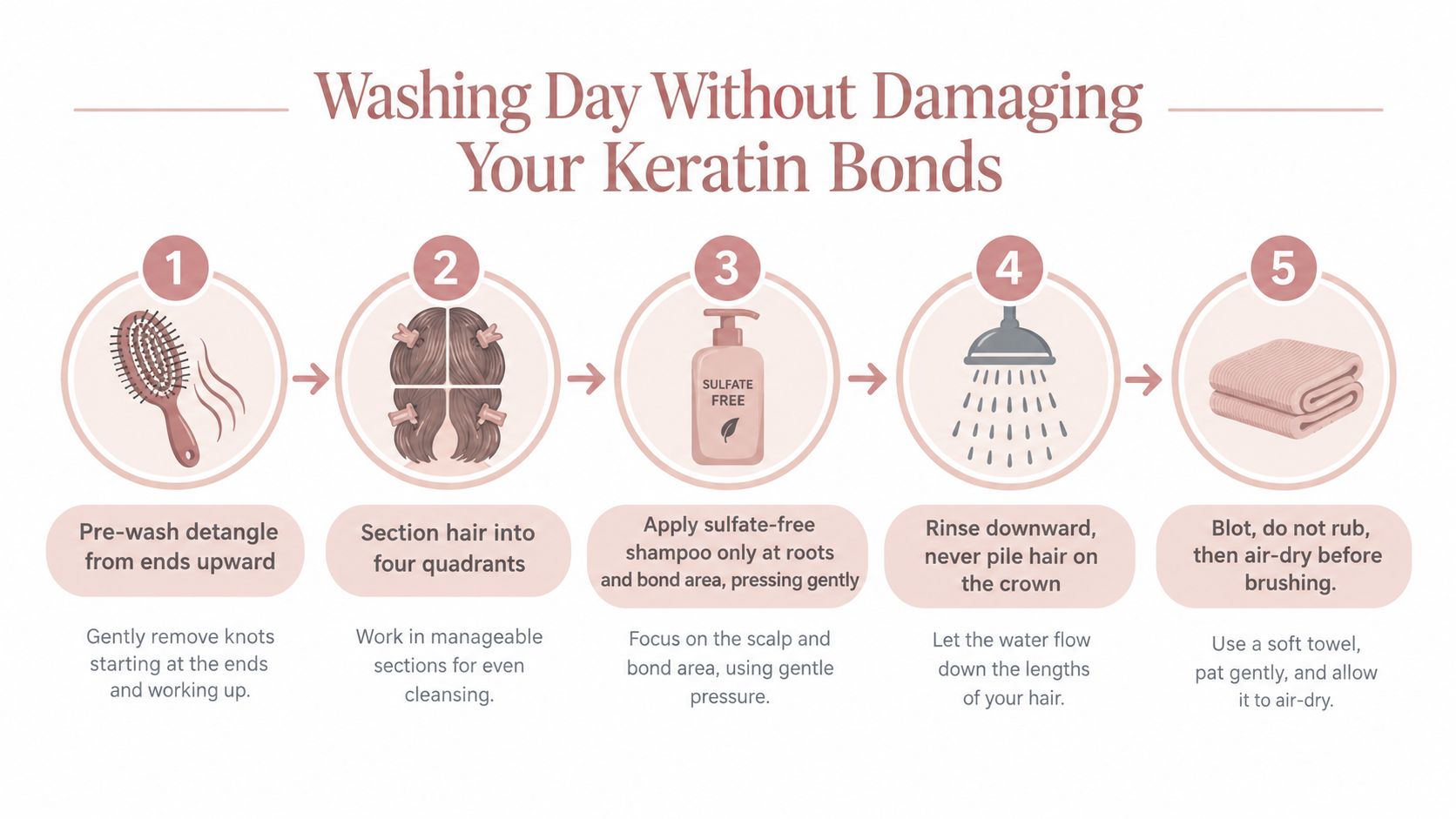
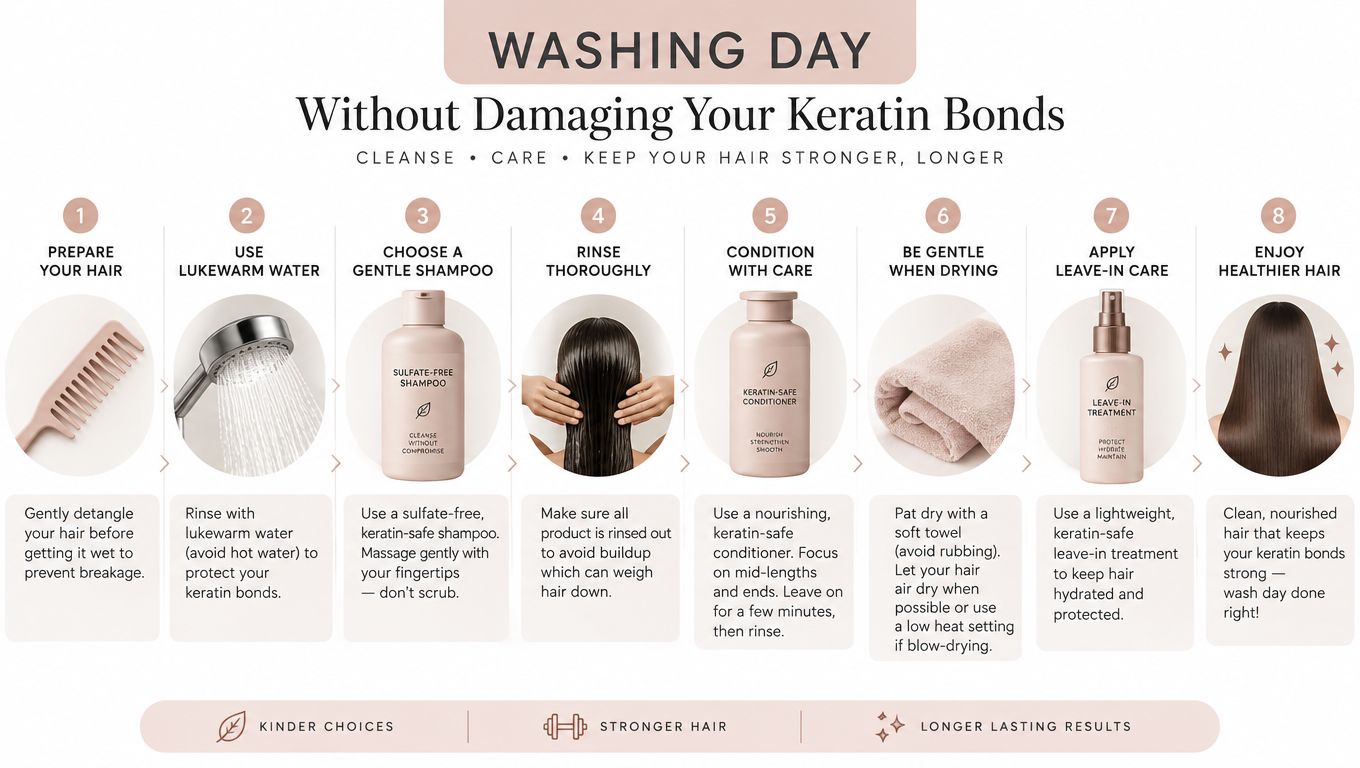
- Detangle before water touches the hair. Start at the ends and work up with a loop brush. Support the roots as you go so shed hair does not cinch tight once it is wet.
- Divide the hair into sections. Four quadrants make it easier to reach the scalp without piling the lengths over the crown.
- Wet the hair upright. Let the water run from roots to ends. Flipping the head forward invites tangling around the bonds, especially in thicker installs.
- Apply sulphate-free shampoo to the scalp. Use your fingertips with light pressure and downward movements. Clean around the bonds without rubbing them in circles.
- Rinse thoroughly. Cool to lukewarm water is kinder to the bond area. Keep the pressure controlled so one row is not taking the full force of the stream.
- Condition the lengths. Apply conditioner from mid-length to ends. Keep it away from the keratin tips, where residue and oils can make slippage more likely.
- Blot, don't rub. Press out excess water with a microfibre towel. Do not twist the hair into a bun while it is wet.
- Dry the bonds completely. Use a low setting and direct airflow down the hair. As you move through the crown rows, keep the dryer moving so no single bond sits under heat for more than a few seconds before you shift position.
For many clients, washing two to three times a week is a practical starting point, although scalp oiliness, exercise and environmental exposure can change that routine. Some Australian aftercare advice suggests washing no more than once or twice weekly, so the right frequency should be agreed with your stylist rather than forced into a single rule. The point is to keep the scalp clean without overworking the bonds or stripping the hair between appointments.
The shortcuts are predictable. Scrubbing in circles tangles the roots. Hot water can make the bond area less stable. Skipping the pre-wash detangle lets shed hair wrap around the attachments. Leaving conditioner at the roots creates a slippery surface where the bond needs to stay secure.
For a more detailed practical routine, see how to wash your hair when you have hair extensions.
Great Lengths Australia's care recommendations also stress regular brushing, careful product placement and keeping heat away from the adhesive. Around the crown and face-framing rows, that means working in small sections and moving the dryer constantly instead of parking it over one bond. That habit protects the attachment area without leaving the rest of the hair damp.
Heat Styling, Products and Tangles to Avoid
Keratin bonds don't need to prevent you from styling your hair, but they do change where and how you apply heat. Keep straighteners and curlers away from the adhesive, use moderate temperatures and apply heat protectant to the lengths rather than flooding the root area.
The most damaging combination is damp hair, direct heat and a bond that's already carrying tension. The keratin can soften, the hair can stretch and the attachment can shift before you notice it.
Product placement matters more than product volume
Use a simple layering order:
- Apply a lightweight, extension-formulated leave-in from mid-length to ends.
- Add a suitable heat protectant to the areas you'll style.
- Dry the attachment points fully, then style the lengths without clamping over the bonds.
- Finish with a small amount of serum on the ends if needed.
Avoid conditioner, oils and rich masks at the bond area. Australian aftercare instructions specifically advise shampooing the scalp while avoiding the keratin tip, conditioning below the tips and keeping hot tools away from the adhesive. Keratin bond aftercare advice from an Australian extension provider explains the reason clearly, direct heat can soften or weaken the bond and increase the risk of slippage.
Bond-Safe vs Bond-Damaging Products and Tools
| Category | Bond-Safe Choice | Avoid |
|---|---|---|
| Shampoo | Sulphate-free shampoo applied with controlled scalp movements | Harsh cleansing products or residue left around the bonds |
| Conditioner | Lightweight conditioner from mid-lengths to ends | Conditioner, masks or oils at the attachment points |
| Detangling | Loop brush or extension-safe paddle brush, working upwards from the ends | Aggressive brushing, metal combs or pulling through wet tangles |
| Heat protection | Extension-compatible thermal protector on the lengths | Direct heat clamped over a bond |
| Finishing product | A small amount of lightweight serum on the ends | Heavy silicone or oil-rich products at the roots |
| Accessories | Soft scrunchies and loose styles | Tight elastics, sharp clips and accessories that grip a bond row |
Some ingredients need individual checking because product formulas vary. Sulphates, sodium chloride, strong alcohol-heavy formulas, heavy silicones and oils can be poor choices around keratin attachments. Don't apply coconut oil, scalp oils or rich dry shampoo directly over the bonds.
Tangles form at the junction because the bond interrupts the natural movement of the hair. Add shed hairs, friction, product residue or a tight hairstyle and that junction becomes a collection point. The answer isn't harsher brushing. It's regular gentle separation, correct product placement and earlier professional attention when the bond begins to move.
Adjusting Your Routine for Fine or Delicate Hair
A standard refit interval can be perfectly reasonable for one client and too long for another. Fine hair has less natural density to distribute the extension weight, and a bond that feels comfortable on thick hair may create too much tension on delicate sections.
That doesn't mean fine hair can't wear keratin bonds. It means the method, strand weight, section size and monitoring need to be selected with more care. If your scalp feels sore, you develop tension headaches, or you notice thinning around the temples, the installation needs review rather than endurance.
Density changes the maintenance plan
Fine-haired clients often need lighter attachments, smaller sections and closer observation. Normal or thicker hair may tolerate broader sectioning and a longer period between appointments, provided the bonds remain secure and the natural hair stays comfortable.
| Hair Type | Wash Frequency | Refit Interval | Strand Weight | Key Adjustments |
|---|---|---|---|---|
| Fine or delicate | Keep washing controlled and reduce unnecessary wetting | Earlier monitoring and a shorter personalised cycle may be appropriate | The lightest suitable option selected in consultation | Smaller sections, low tension, dry brushing and loose sleep styles |
| Normal density | A routine based on scalp oiliness and lifestyle | A standard salon schedule if bonds remain stable | Selected to match the natural hair | Balanced sections, regular brushing and full bond drying |
| Thick or coarse | Adjust for scalp needs, sweat and product buildup | May tolerate a longer cycle when the attachment remains comfortable | A weight suited to the density and strength of the natural hair | Thorough cleansing, careful root drying and attention to tangling underneath |
Fine hair can also show movement at the root sooner because there's less surrounding hair to disguise it. A stylist may recommend a discreet micro-bond or another lightweight method rather than adding more keratin bonds. The correct answer depends on the strand strength, density, desired volume and how the hair behaves between washes.
Signs the installation is too heavy
Watch for discomfort that doesn't settle, pulling when you turn your head, repeated tension at the temples or a section that feels tight whenever you brush. A bond shouldn't need to be held in place by forceful brushing, and you shouldn't ignore pain because you've paid for the application.
Fine-haired clients also need to be more disciplined about brushing only when the hair is dry and supporting the roots during detangling. Sleeping with a loose braid on a smooth pillowcase is preferable to a tight clip or ponytail that concentrates pressure in one area.
For local guidance on choosing a suitable method, read hair extensions for fine hair on the Gold Coast. A consultation should compare keratin bonds with alternatives such as nano beads, micro beads or lightweight wefts, rather than assuming one method suits every head of hair.
Salon Refits, Removal and a Realistic Maintenance Calendar
A keratin bond set does not stay in place on a fixed schedule. The timing depends on two separate checks, whether the bonds are still secure and comfortable, and whether enough natural growth has happened that the extensions now need to be removed, replaced, or moved.
For many clients, maintenance falls within six to ten weeks, while several Australian aftercare guides advise six to eight weeks to reduce slippage and tangling. Keratin bonds themselves may sit within a broader three-to-six-month lifecycle, depending on growth, home care, bond integrity, and whether the hair can be safely reworked. Australian hair extension service guidance describes that lifecycle and also notes the need for maintenance checks.
What happens at a refit
A proper appointment starts with assessment, not immediate removal. I look at where the bond has shifted, check for matting, and judge whether the natural hair has stayed healthy under the installation.
A standard refit may include:
- separating the hair into controlled sections
- checking for slippage, tangling, and excess growth
- applying a professional bond-removing product
- breaking down the keratin with the right tool
- removing the extension without pulling the natural hair
- detangling shed hair from the section
- assessing the extension hair for dryness, breakage, and product build-up
- deciding whether to re-tip, replace, or retire the hair
- cleansing and preparing the natural hair for the next application
Keratin bonds are not automatically reusable. One Australian source notes that the tips become broken down and contaminated after removal, which means they are not reused in the same way as some beaded systems. Another explains removal with a keratin remover gel and tool. Australian keratin bond information makes the lifecycle cost clearer than a simple “long-lasting” promise.
Premium hair can sometimes be used again if the cuticle, ends, and overall integrity still hold up, but that call needs to be made after removal. Hair that has dried out, shed heavily, or collected product around the tip is often better retired. Reusing compromised hair can create more tangling and a poorer blend, even if the bonds themselves could technically be replaced.
When to book earlier
Do not wait for the next booked appointment if you notice:
- visible slippage, or a bond moving when you touch it
- matting close to the scalp
- a bond sitting noticeably away from the scalp
- tenderness, tension headaches, or ongoing itching
- a section that catches again and again during brushing
- natural hair thinning around the temples
- moisture that never seems to dry properly between the rows
Swimmers, gym-goers, and clients who spend time outdoors often need more frequent checks because repeated moisture, sweat, salt, and chlorine place extra strain on the bond area. That does not automatically mean the extensions need to come out early, but it does mean the routine and appointment schedule should match the lifestyle.
Maintenance calendar at a glance
| Timeframe | Standard Hair | Fine or Delicate Hair | Active or Swimmer Lifestyle |
|---|---|---|---|
| Installation day | Keep bonds undisturbed and follow the dry-period advice | Use low-tension styling and watch comfort closely | Plan how hair will be protected from sweat, salt, and chlorine |
| First fortnight | Brush carefully and attend the recommended check-in | Review any tenderness, lifting, or excess weight early | Dry the bond area thoroughly after exercise or water exposure |
| Ongoing wear | Follow the agreed brushing, washing, and product routine | Use lighter handling and closer visual checks | Rinse promptly after swimming and avoid leaving hair damp |
| Refit stage | Book before slippage and root tangling become established | Expect a more individualised schedule | Bring the appointment forward if bonds loosen or matting appears |
| Final removal | Have a professional break down and remove the bonds | Assess natural hair density before reapplication | Review whether the current method suits the lifestyle |
A refit is not the same thing as a removal. A refit suits hair and extensions that can still be worked with safely. A removal appointment suits hair that needs a break, bonds that are no longer suitable, extension hair that has reached the end of its useful cycle, or a client whose method needs to change.
Removal by the original installer is usually the safest choice because that stylist already knows the bond size, placement pattern, extension material, and products used. A new stylist can still assess the hair, but they need to work more cautiously when the installation history is unknown.
For a broader view of extension longevity and planning, read how long hair extensions last. The useful question is not only how long a set can stay attached. It is how long it can stay attached while your natural hair remains comfortable, untangled, and in good condition.
Hair Extensions Full Stop provides consultation, colour matching, keratin bond application, refits, removal, and aftercare guidance for clients choosing hair extensions on the Gold Coast. If you are in Ashmore or nearby, visit Hair Extensions Full Stop to discuss your hair density, lifestyle, and the maintenance plan that will keep your extensions manageable.
Recent Articles


