

You've washed your hair after a morning at the beach, dried it carefully and tied it into a ponytail, only to notice that one attachment feels lower than it did last week. The extensions still look good, but you're wondering whether the movement is normal or whether your next appointment is already overdue.
That's the question behind how long do extensions last on the Gold Coast. The honest answer has two parts. The attachment needs regular maintenance, usually measured in weeks, while the extension hair itself can remain usable for many months. Humidity, salt water, UV exposure, gym sweat and frequent washing can influence both timelines, especially for clients living an active coastal lifestyle.
Table of Contents
- A Gold Coast Morning That Asks the Real Question
- Why Extension Longevity Has Two Different Clocks
- How Long Each Extension Method Lasts on the Gold Coast
- Coastal Living and What It Does to Wear Time
- Care Habits That Quietly Add Months to Your Extensions
- Refit Timing and the Cost of Waiting Too Long
- The Honest Range for Premium Human Hair
- Choosing the Right Method for Your Lifestyle
A Gold Coast Morning That Asks the Real Question
A client from Burleigh Heads once arrived after adjusting her ponytail in the carpark. She was three weeks past a tape refit and had noticed a little lifting near one side of her head. Nothing was dramatically wrong, but the attachment no longer sat as close to the scalp, and she wanted to know whether the set was failing.
That's a common point of confusion. A grown-out attachment doesn't automatically mean the extension hair has reached the end of its life. Natural hair keeps growing, so the attachment moves away from the scalp even when the length and colour still look beautiful. Australian guidance places many semi-permanent refits around four to six weeks, while tape-in extensions may also be maintained around six to eight weeks, depending on the method, hair and lifestyle (Australian extension maintenance guidance).
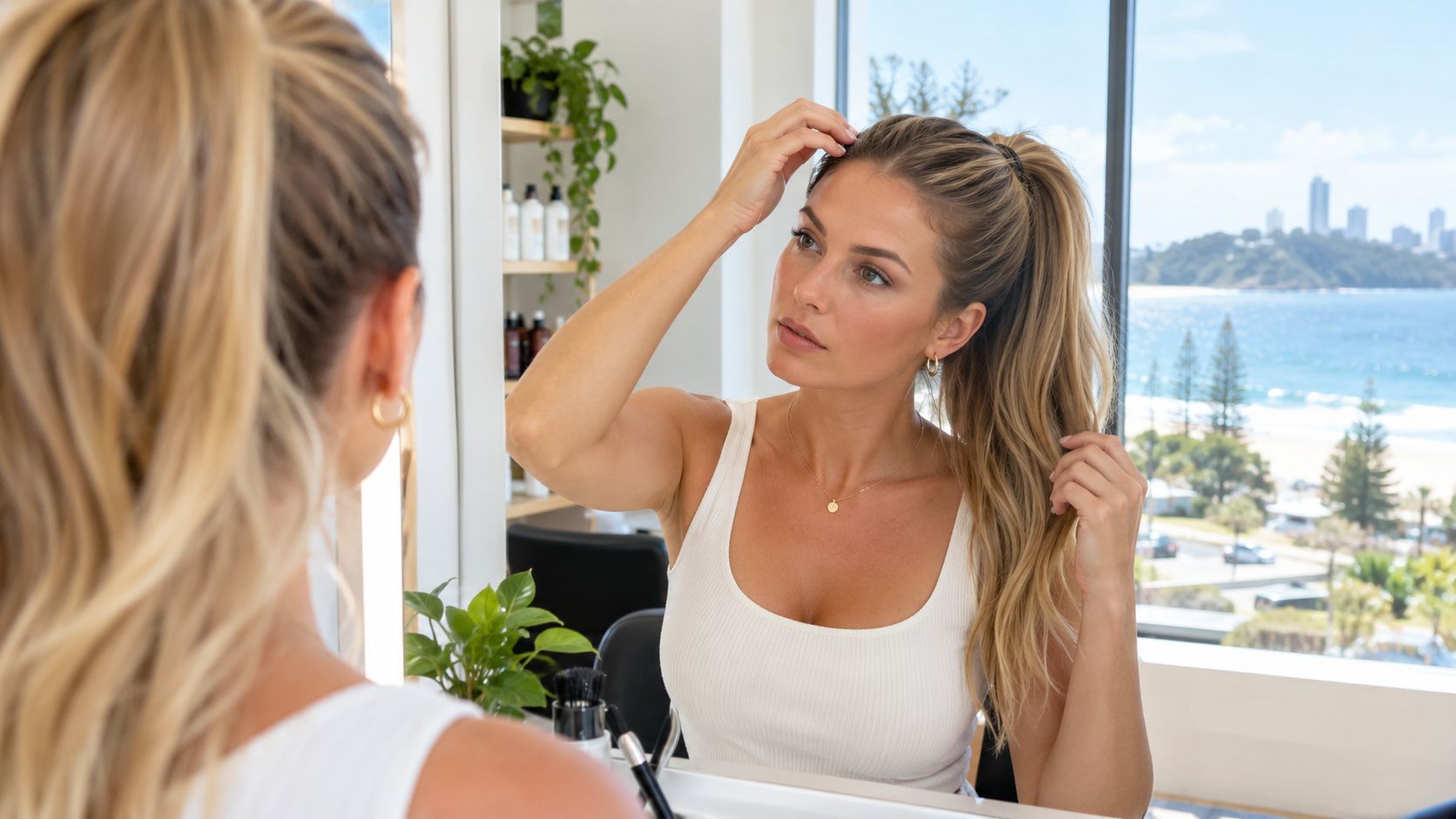
I describe extension longevity as two clocks. The first clock measures how long the attachment can safely remain in place before a move-up, refit or removal. The second measures how long the human hair remains soft, blendable and reusable before dryness, tangling or shedding make replacement the sensible option.
The practical answer: Your extensions may need a salon visit before the hair itself needs replacing.
On the Gold Coast, those clocks are affected by more than hair growth. Salt air can leave the lengths dry, UV can fade and dehydrate the hair, humidity can affect tape and bonds, and sweat can increase the need for washing. A client who swims regularly may need a different method and care routine from someone who rarely exercises and spends most days indoors.
Why Extension Longevity Has Two Different Clocks
The first clock is the refit cycle. It's governed mainly by natural regrowth and the way the method is attached. Australian salons commonly schedule permanent extension maintenance around six to ten weeks, because growth can leave bonds visible, increase tension and allow the root area to mat if the appointment is delayed (Australian permanent extension guidance).
The second clock is the total usable lifespan of the extension hair. Australian guidance gives a broad human-hair range of three to eighteen months, depending on method, product quality, washing, heat exposure and aftercare (Australian extension lifespan guide). Other local guidance places commonly maintained semi-permanent hair around six to twelve months, with premium human hair potentially lasting longer when it's removed, repositioned and cared for correctly (Australian salon extension guide).
Clock one is the attachment
A tape sandwich, weft, bead or bond can look acceptable from the outside while becoming less secure at the root. As natural hair grows, the attachment point moves down. That extra distance creates more movement, stress and opportunity for tangling.
The right response isn't always a full new set. A stylist may remove the attachments, check the natural hair, clean away residue, reposition reusable hair and reshape the blend. Whether that works depends on the method and the condition of the hair.
Clock two is the extension hair
Human hair has already been processed and styled before it reaches the client. Every wash, blow-dry, hot tool, swim and day in strong sun can affect the cuticle and moisture balance. Hair that's maintained on time can still become too dry or tangled for economical reuse if the daily routine is harsh.
This is why missing a refit and replacing the entire set are separate problems. One concerns attachment safety and positioning. The other concerns the condition of the lengths and ends.
How Long Each Extension Method Lasts on the Gold Coast
No method wins every category. Tape can be discreet and quick to refit, wefts can create efficient volume, beads avoid glue and heat, and keratin bonds can offer a longer gap between maintenance appointments. The best choice depends on density, natural hair strength, styling habits and how often the client swims or washes.
The ranges below reflect Australian maintenance guidance. Tape extensions are commonly refitted around six to eight weeks, with some salons allowing six to ten weeks. Micro ring guidance can reach eight to twelve weeks, while keratin bonds are often maintained over a longer window than tape or bead systems (Australian method maintenance guide).
| Method | Refit Interval | Total Usable Life |
|---|---|---|
| Tape-in | 6–8 weeks, sometimes 6–10 weeks | Commonly 6–12 months with suitable care |
| Weft | Usually 6–8 weeks | Commonly 6–12 months with suitable care |
| Micro bead | Often 6–8 weeks, with some guidance allowing 8–12 weeks | Commonly 6–12 months with suitable care |
| Nano bead | Often 6–8 weeks | Commonly 6–12 months with suitable care |
| Keratin bond | Often longer than tape and bead methods, assessed by growth and bond condition | Can sit within the broader 3–18 month human-hair range |
Tape-in extensions
Tape is popular because it lies flat and can create a smooth, natural result without individual strands throughout the head. The trade-off is that the adhesive area is sensitive to product placement, oil and repeated moisture. Humidity and frequent washing can make a coastal routine harder on tape than a controlled indoor routine.
Tape also requires careful removal. Pulling at a lifted edge or allowing two panels to remain separated can encourage tangling around the natural hair. For a regular beachgoer, tape may still work well, but the appointment schedule and aftercare need to be realistic.
Weft extensions
Invisible and butterfly-style wefts can provide substantial volume while keeping the attachment relatively flat. They can suit clients with enough density to support the row, but the row still needs monitoring as the natural hair grows.
Wefts often work well for clients who want broad coverage rather than many individual attachment points. They're not maintenance-free, though. Root separation, gentle brushing and timely refits matter because a row can conceal early tangling until it becomes harder to remove.
Micro and nano bead extensions
Micro bead extensions use small beads rather than glue or heat. Nano beads are a more discreet individual option and can suit finer or delicate hair when the weight and placement are appropriate. Their practical advantage is reusability, provided the hair remains in good condition and the stylist can remove and reposition it safely.
The small attachment size doesn't remove the need for maintenance. Fine strands can be vulnerable to excessive weight, so a careful consultation matters more than just choosing the smallest bead. Clients comparing these methods can review the detail in this micro bead extension guide.
Keratin bonds
Keratin bonds can provide secure, strand-by-strand placement and styling flexibility. They're often chosen when the client values hold and a unified result, but removal must be performed carefully and the natural hair needs regular assessment.
The longer maintenance gap sometimes associated with bonds shouldn't be treated as permission to ignore regrowth. If bonds have moved, twisted or begun to catch against one another, waiting longer can create unnecessary tension and matting.
Coastal Living and What It Does to Wear Time
Gold Coast conditions can shorten the usable life of extensions without producing an obvious problem on the first day. Salt water draws attention to the ends because it leaves hair feeling rougher after drying. UV exposure can fade colour and make the lengths feel drier, while humidity can increase frizz and affect the way tape sits.
Pool chlorine creates a different challenge. It can strip the feel from the hair and make already-processed lengths harder to detangle. Daily beach access, frequent showers and outdoor exercise combine these stresses, so a client who swims often may use up the second clock faster than someone with the same method and hair quality in a gentler routine. Australian guidance specifically identifies humid coastal areas such as Brisbane and the Gold Coast as environments where frequent washing and exposure can wear extensions more quickly (coastal extension care guidance).
Make the first rinse part of the beach routine
Rinse the hair with fresh water as soon as practical after leaving the surf or pool. A leave-in product with UV protection before a beach day can help reduce the drying effect of sun exposure, while a loose braid or cap limits friction and direct sunlight during longer periods outdoors.
Don't braid wet hair tightly around the attachments. Let it dry gently, then separate the roots and brush the lengths in manageable sections.
Prepare for the next appointment
A clarifying wash before a salon visit can help remove product residue, salt and buildup, but it should be used sensibly and not as an excuse to scrub aggressively around attachments. Tell the stylist how often you swim, how much you sweat during training and how often you wash. Those details help determine whether the current method and maintenance schedule still make sense.
Care Habits That Quietly Add Months to Your Extensions
Good extension care is less about buying a shelf full of products and more about keeping the attachment area clean, the lengths conditioned and the hair free from avoidable friction. Australian aftercare guidance commonly recommends washing one to two times per week, avoiding oils near tape and separating the hair with your fingers to reduce tangling (Australian extension aftercare advice).
Wash the scalp, protect the attachments
Use a gentle, extension-suitable shampoo at the scalp and allow the lather to travel through the lengths rather than scrubbing the attachment area. Apply conditioner from the mid-lengths to the ends, keeping rich products away from tape, beads and bonds.
If the Gold Coast climate or your training routine requires more frequent washing, focus on thorough rinsing and careful drying rather than allowing sweat and salt to remain at the roots. Product buildup can make the hair harder to separate at the next refit.
Brush from the ends upwards
Use an extension-safe loop brush or a soft detangling brush. Support the root area with one hand, divide the hair into sections and work from the ends upwards. This reduces the pulling force placed on an attachment when a knot forms lower down.
Brush before bed and before washing, then check the root area after drying. A loose plait for sleep can reduce movement, and a silk pillowcase may reduce friction for clients who move around at night.
Treat heat as a styling choice
Always use a thermal protector and keep hot tools at a moderate setting. Heat applied repeatedly to the same ends accelerates dryness, particularly when the hair has already been exposed to sun, salt and chlorine.
Avoid heavy oils close to the attachment points. Oils can affect tape areas and make the root harder to clean. A light product on the ends is a different proposition from saturating the bonds or adhesive.
The guide to washing hair with extensions covers the washing sequence in more detail. At every move-up, ask for a bond and root check rather than treating the appointment as a simple repositioning service.
Refit Timing and the Cost of Waiting Too Long
A client who books tape or weft maintenance around the recommended window usually gives the stylist clean access to the attachments. The hair can be separated, removed and repositioned before small tangles become a dense root mat.
A client who waits until the extensions feel heavy or visibly loose may need more corrective work. Australian salon guidance warns that pushing maintenance beyond the recommended window can allow matting and pulling to develop, and may even affect warranty conditions (extension maintenance and warranty guidance).
| Method | Recommended Refit Window | Full Redo Interval | Risk of Waiting Too Long |
|---|---|---|---|
| Tape-in | Usually 6–8 weeks, assessed by growth | Based on hair condition and reusability | Lifting, residue, tangling and traction |
| Weft | Usually 6–8 weeks, assessed by row growth | Based on row condition and hair quality | Root matting, uneven tension and discomfort |
| Micro bead | Often 6–8 weeks, with some systems assessed later | Based on shedding and hair condition | Movement, tangling and pressure on fine sections |
| Nano bead | Often 6–8 weeks | Based on individual strand condition | Slippage, twisting and localised tension |
| Keratin bond | Assessed over a longer maintenance window | Based on bond condition and hair quality | Grown-out bonds, tangling and difficult removal |
What happens at the appointment
A careful stylist checks whether the natural hair is clean and strong enough for the next installation. They look for excessive shedding, tenderness, matting, slipping attachments and dryness through the extension lengths.
Rushing in the opposite direction can also be unhelpful. Removing a method before enough regrowth is present may disturb the natural hair unnecessarily and leave less room for a useful move-up. The timing should follow the attachment, the regrowth and the condition of the client's hair, not a fixed calendar habit.
For a Gold Coast client, the sensible schedule may change after a summer of swimming, a new gym routine or a period of frequent washing. Good maintenance is responsive rather than automatic.
The Honest Range for Premium Human Hair
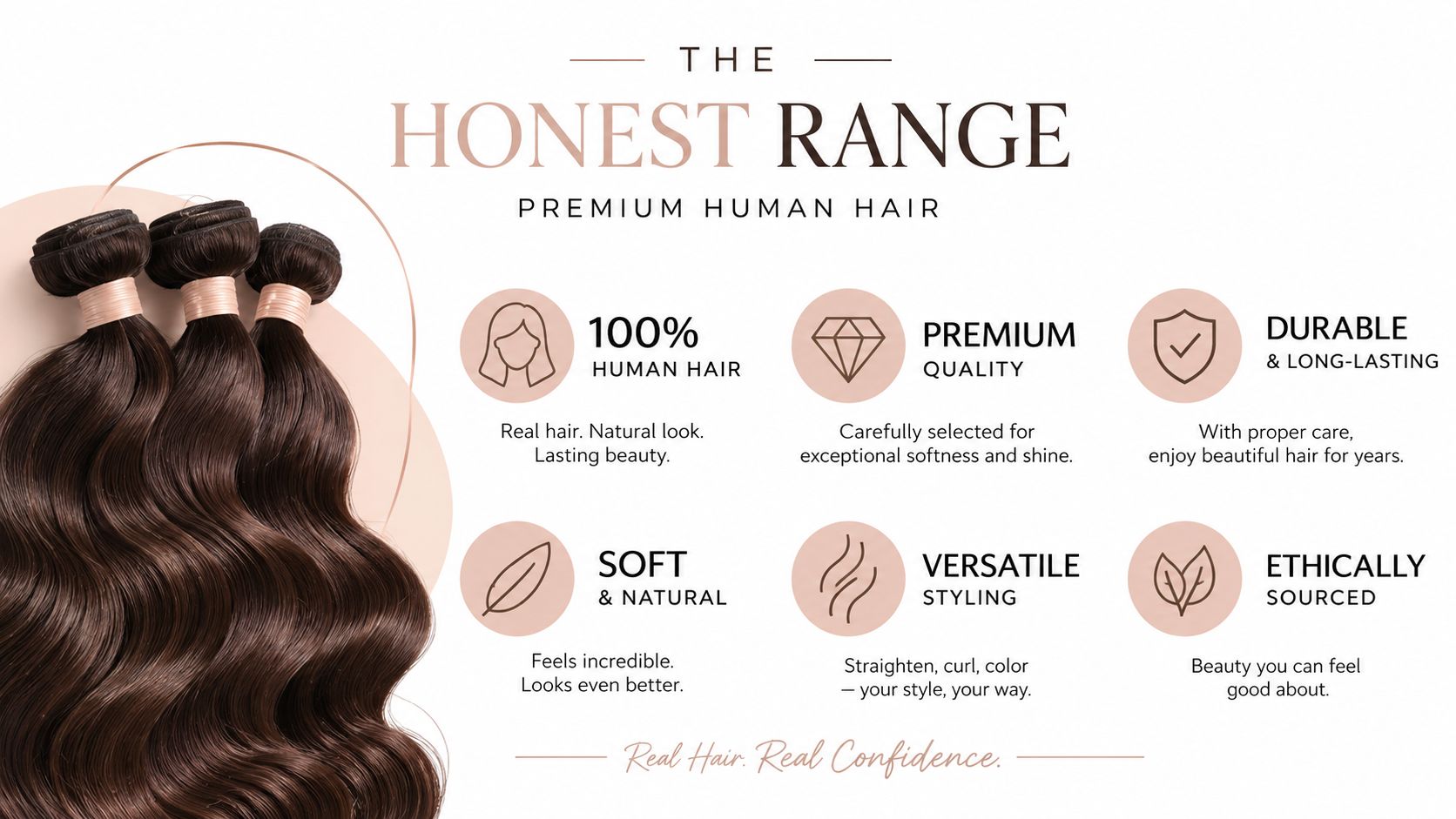
Marketing often makes premium hair sound indestructible. It isn't. Even high-quality human hair can become dry, porous or difficult to blend when it's exposed to daily heat, strong sun, salt, chlorine and repeated washing.
Australian guidance includes both conservative expectations around six to twelve months and longer possibilities for premium human hair when care and maintenance are excellent (Australian semi-permanent extension guidance). The useful distinction is between the hair being technically present and the hair still being attractive, comfortable and economical to reuse.
Three factors usually decide where a client lands:
- Starting quality: Remy and other high-quality human-hair systems generally give the stylist more usable texture and a better foundation than lower-quality hair.
- Wear intensity: Daily hot-tool styling, frequent washing and regular ocean or pool exposure place more stress on the lengths.
- Care discipline: Timely refits, gentle brushing, suitable products and careful drying protect both the attachment and the hair.
Claims of twelve to twenty-four months can describe excellent conditions, careful rotation or an unusually gentle routine, but they shouldn't be treated as a guarantee for every Gold Coast lifestyle. A client who swims regularly and heat-styles most days may reach replacement point sooner than someone who washes less often and avoids direct sun.
Synthetic and blended fibres also have a different performance profile from human hair. They can offer a particular finish or price point, but they won't respond to styling and long-term maintenance in the same way as premium human hair.
Choosing the Right Method for Your Lifestyle
The right method starts with your routine, not a photo of someone else's hair. Ask two questions before choosing: How many weeks can I realistically allow between refits? And how many months do I expect the hair itself to remain reusable?
| Extension Method Matched to Gold Coast Lifestyle | Best For | Refit (Weeks) | Total Use (Months) |
|---|---|---|---|
| Tape-in | Clients wanting a flat attachment and willing to maintain it regularly | 6–8, assessed by growth | Commonly 6–12 with suitable care |
| Weft | Clients wanting broad volume and a row-based application | Usually 6–8 | Commonly 6–12 with suitable care |
| Micro bead | Clients wanting a glue-free, reusable individual method | Often 6–8 | Commonly 6–12 with suitable care |
| Nano bead | Fine or delicate hair needing discreet individual placement | Often 6–8 | Commonly 6–12 with suitable care |
| Keratin bond | Clients prioritising strand-by-strand hold and styling flexibility | Longer than tape or bead methods in many cases | Dependent on bond and hair condition |
For swimmers and regular beachgoers
Tape can offer a practical refit routine, but frequent exposure to water, sweat and humidity demands disciplined rinsing, drying and root care. Some active clients may prefer a method that suits regular maintenance, while others may choose temporary clip-in hair for occasional events rather than wearing semi-permanent extensions through every swim.
For busy professionals
Micro or nano bead methods can suit clients who want discreet volume and a reusable system without glue or heat. Fine hair needs particularly careful weight distribution, bead placement and regular separation. A smaller attachment isn't automatically safer if too much hair is added to one section.
For event-led wear
Keratin bonds can suit a client who wants precise, strand-by-strand placement and is prepared for a longer appointment and more deliberate removal process. They may offer a different balance between hold and maintenance, but the natural hair still needs regular checking as it grows.
Thicker hair may support a weft comfortably when the row is correctly placed and weighted. Finer hair may be better suited to lighter individual methods, but the final decision should follow an assessment of density, strength, goals and lifestyle. This Gold Coast guide to choosing an extension method can help you prepare for that conversation.
Hair Extensions Full Stop provides consultation, colour matching, application and ongoing maintenance in Ashmore, with methods including invisible and butterfly wefts, micro beads, nano beads and keratin bonds. Visit Hair Extensions Full Stop to discuss your hair type, Gold Coast lifestyle and the refit schedule that will keep your extensions looking natural and your own hair well supported.
Made with the Outrank app
Recent Articles


